

.png)
Reducing Collector Burnout With Better Tools
Collector burnout is one of the most persistent—and expensive—problems in collections operations.
High turnover.
Inconsistent performance.
Rising training costs.
Lower morale on the floor.
Most agencies recognize the symptoms, but many misdiagnose the cause. Burnout isn’t just about call volume or difficult consumers. In many cases, it’s the result of asking collectors to carry too much cognitive and emotional load without enough real-time support.
Reducing burnout starts with better tools—not more pressure, longer training, or stricter QA.
Why Burnout Is So Common in Collections
Collections is a demanding environment by nature. Collectors are expected to:
Navigate emotionally charged conversations
Handle objections, disputes, and hardship statements
Follow strict compliance requirements
Maintain payment momentum
Document every call accurately
All of this happens under time pressure, often across multiple clients with different rules. When collectors are left to manage this complexity alone, fatigue sets in quickly.
The Hidden Drivers of Collector Burnout
Burnout rarely comes from one big issue. It builds over time from friction that never goes away.
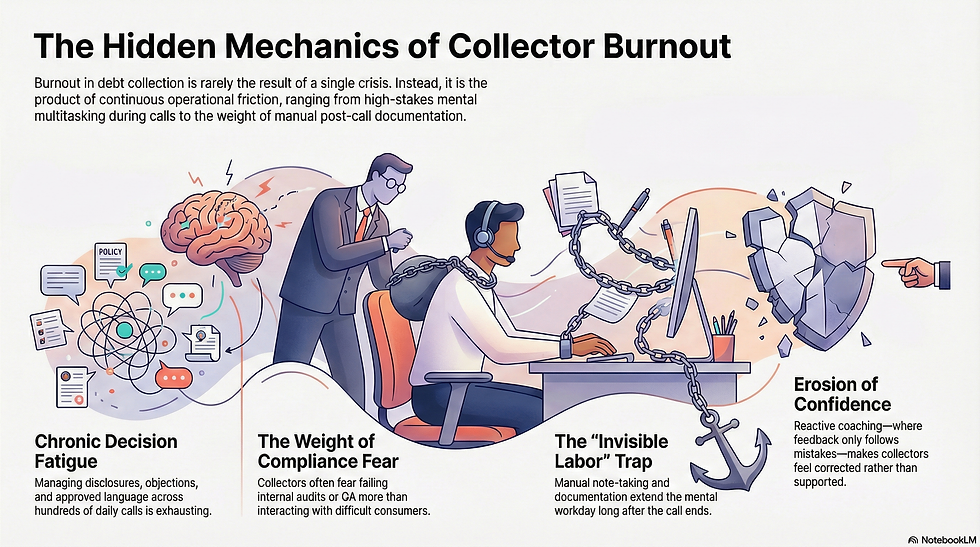
Mental Overload During Live Calls
Collectors must remember:
Which disclosures apply
How to respond to specific objections
When to pivot or escalate
What language is approved
That constant decision-making is exhausting—especially over hundreds of calls a day.
Fear of Making a Mistake
Compliance pressure weighs heavily on collectors. Many are less worried about angry consumers than about:
Missing required language
Failing QA
Triggering escalations or audits
That stress compounds over time.
After-Call Work That Never Ends
Manual notes, dispositions, and documentation extend the workday mentally—even after calls end. This “invisible labor” is a major contributor to burnout.
Reactive Coaching
When feedback only arrives after mistakes happen, collectors feel corrected rather than supported. Over time, this erodes confidence.
Why Traditional Fixes Don’t Work
Many agencies try to address burnout with:
More training
More scripts
More monitoring
More coaching sessions
While well-intentioned, these approaches often add more burden instead of removing it.
Training doesn’t help in the moment. Scripts don’t adapt to real conversations. Monitoring identifies problems after the stress has already occurred. Burnout isn’t a motivation problem—it’s a support problem.
How Better Tools Reduce Burnout at the Source
Reducing burnout means reducing friction during the work itself. The most effective tools do three things:

1. Reduce Cognitive Load
When collectors don’t have to remember every rule or response, mental fatigue drops. Real-time guidance helps collectors:
Know what to say next
Stay within approved call flows
Handle objections confidently
Less guessing = less stress.
2. Provide Support During the Call, Not After
Collectors perform better when they feel supported while the call is happening—not judged afterward. In-the-moment prompts and guidance turn complex conversations into manageable steps.
3. Eliminate Unnecessary After-Call Work
Automated summaries, dispositions, and QA scoring free collectors from repetitive documentation—one of the biggest burnout drivers in collections. When collectors can focus on conversations instead of paperwork, job satisfaction improves.
The Connection Between Burnout and Performance
Burnout doesn’t just affect morale—it directly impacts results. Burned-out collectors are more likely to:
Hesitate during objections
Rush or disengage
Miss required steps
Leave the organization altogether
Reducing burnout improves:
Payment conversations
Call consistency
Compliance outcomes
Retention and ramp time
Better tools create a virtuous cycle: confidence leads to better calls, which leads to less stress.
How High-Performing Agencies Approach Burnout Differently
Leading collection agencies don’t rely on resilience alone. They design systems that support collectors in real time. They focus on:
Making the “right” action the easiest action
Embedding guidance into daily workflows
Preventing errors instead of reacting to them
Supporting collectors as professionals, not just resources
Burnout drops when collectors feel capable, supported, and set up to succeed.
Technology as a Support System, Not a Surveillance Tool
One important distinction: tools that reduce burnout assist, they don’t police. When technology is used only to monitor and score, stress increases. When technology is used to guide and support, stress decreases. Collectors don’t want more oversight—they want more clarity.
Bringing It All Together
Collector burnout isn’t inevitable. It’s often a signal that the tools collectors rely on haven’t kept up with the complexity of the job.
By reducing cognitive load, supporting collectors during live calls, and eliminating unnecessary after-call work, agencies can create healthier, more sustainable operations.
AI Collector Assist is designed with this goal in mind—providing real-time guidance, compliance cues, and automated wrap-up so collectors can focus on conversations instead of juggling rules.


Comments